The number is printed in black and white on every FUEL POWER box: 100mg of caffeine per pouch. But a number alone doesn't say much until you know what to compare it to. So, concretely, is 100mg a lot or not?
Putting 100mg in the context of your day
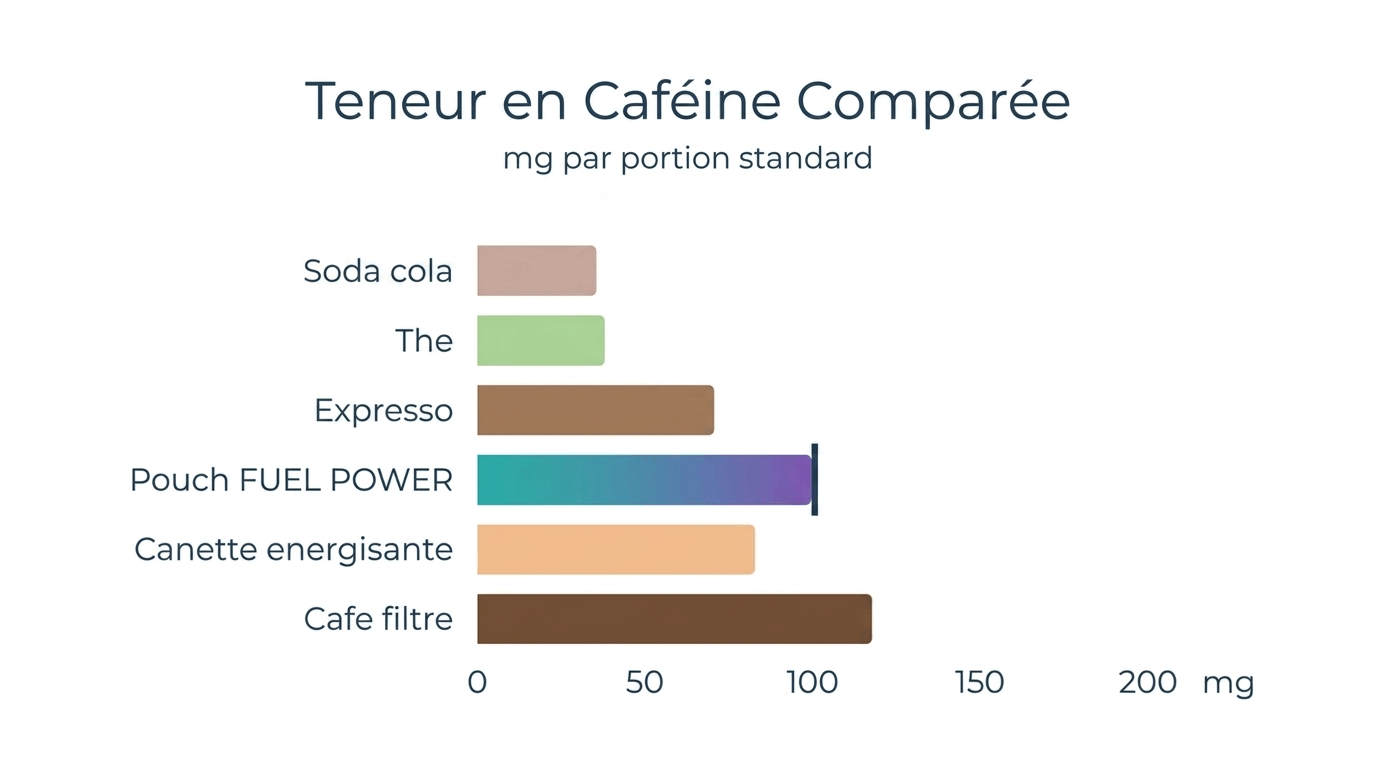
The best way to get a sense of it is to compare it with what you're probably already drinking without thinking about it.
| Drink | Average caffeine content |
|---|---|
| Espresso (30ml) | 60 to 80mg |
| Filter coffee (one cup) | 90 to 140mg |
| Black or green tea | 25 to 50mg |
| Energy drink can (250ml) | About 80mg |
| Cola-type soda (330ml) | 30 to 40mg |
| FUEL POWER pouch | 100mg |
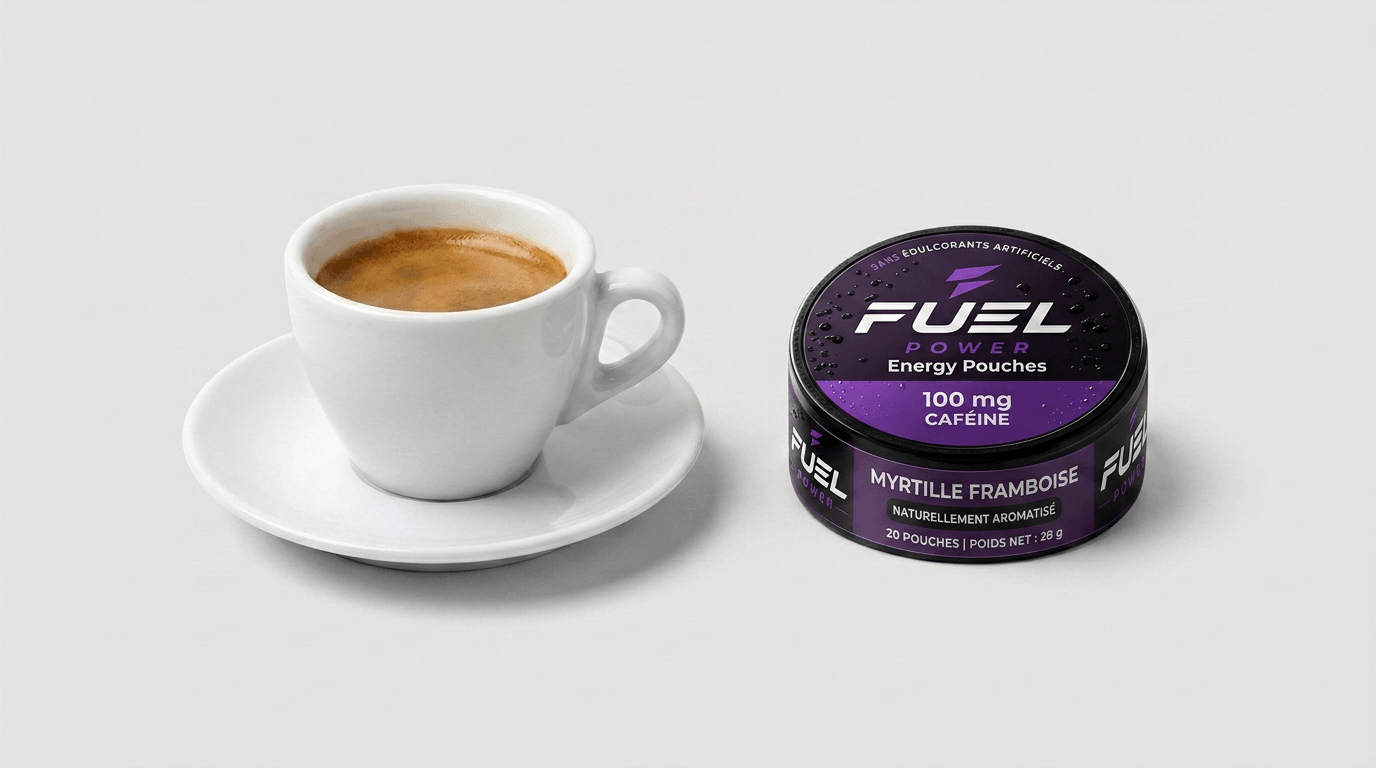
These figures vary depending on preparation and brand, so take them as rough orders of magnitude rather than absolute values. What stands out is that a FUEL POWER pouch sits roughly between an espresso and a strong filter coffee — without the variability you get with coffee, whose dosage changes depending on how it's prepared.
What EFSA precisely says about a 100mg dose
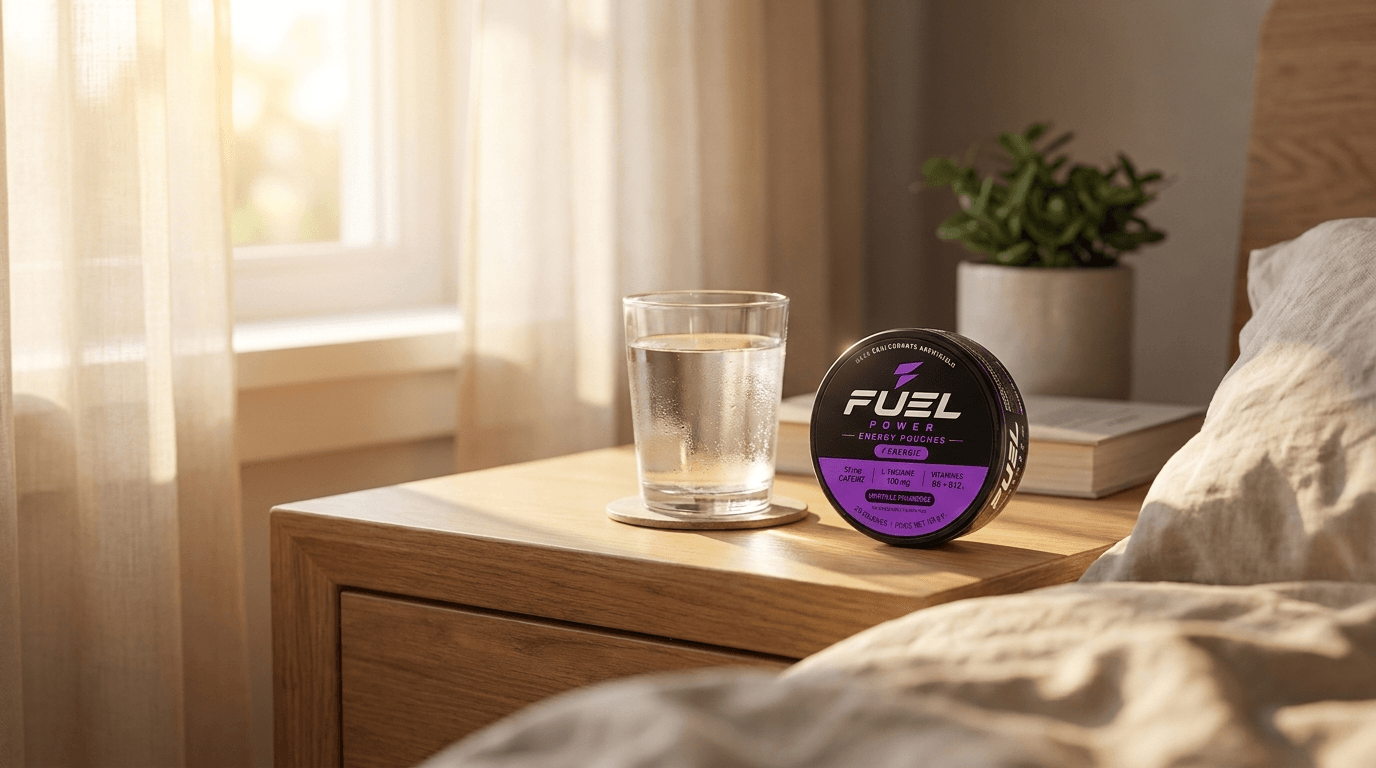
This is where it gets interesting, because the European Food Safety Authority (EFSA) has fairly precise guidance on this exact dose. On its reference page dedicated to caffeine, the agency states that a single 100mg dose of caffeine can affect sleep duration and quality in some adults, particularly when consumed close to bedtime. It's a very concrete data point: it's not really the dose itself that raises a general safety concern, it's mainly the timing of when you consume it.
EFSA also notes that single doses up to 200mg, and daily intakes up to 400mg across all sources, don't raise safety concerns for a healthy adult. So 100mg, as a single dose, remains well below that general caution threshold — but the note about sleep is worth keeping in mind.
Where 100mg sits against the recommended daily total
If the generally accepted threshold is around 400mg per day for a healthy adult, a single FUEL POWER pouch represents about a quarter of that reference. That leaves some room, as long as you don't stack up sources: a pouch in the morning, a coffee at lunch, and an energy drink in the late afternoon can quickly climb past that threshold without you really noticing. This is a point health authorities regularly raise in their recommendations on caffeinated drinks, stressing the importance of counting your total intake from all sources, not just the one you happen to be thinking about when doing the math.
What this actually means for everyday use
In practice, one or two FUEL POWER pouches a day remain within a reasonable range for the vast majority of adults, as long as you space out your intake and don't stack them with several coffees or an energy drink on the same day. To go deeper into this mechanism in the body, our article on how caffeine works in your body details what happens between absorption and elimination.
Why the felt effect varies so much from person to person
Body weight, usual caffeine tolerance, pregnancy, or certain medical treatments can make the same 100mg dose feel very different from one person to another. If you don't yet know where you stand, our article on caffeine sensitivity can help you better understand your own tolerance before adjusting your consumption.
Conclusion
100mg is neither an insignificant dose nor an extreme one: it's the equivalent of a good coffee, with the advantage of always being the same amount, pouch after pouch. The real point of attention isn't so much the dose itself as the cumulative total with other sources during the day, and the timing of when you consume it — EFSA is clear on this point regarding sleep.
FAQ
100mg of caffeine is equivalent to how many coffees? Roughly a strong filter coffee or an espresso and a half, keeping in mind that coffee's caffeine content varies with how it's prepared.
Can I have several FUEL POWER pouches in the same day? Yes, but keep track of your total caffeine intake across all sources, and space out your intake.
Does 100mg of caffeine disrupt sleep? According to EFSA, a single 100mg dose can affect sleep duration and quality in some people, especially if consumed close to bedtime.
What's the daily caffeine limit not to exceed? European health authorities generally place this limit around 400mg per day for a healthy adult, across all sources.
Is 100mg a dose suitable for everyone? Not necessarily. Caffeine tolerance varies a lot depending on body weight, consumption habits, and certain situations like pregnancy.
Want to discover a clear, consistent caffeine dose, pouch after pouch? Discover the 6 FUEL POWER flavors.