In the morning, everything often plays out in the first 30 minutes after waking up. Three simple habits, backed by well-documented mechanisms, can make a real difference to your energy for the rest of the day.
Routine 1 — Get natural light as soon as you wake up
The body has an internal biological clock, driven notably by exposure to daylight, which regulates functions like body temperature or cortisol secretion. This internal clock directly influences the quality of wakefulness and sleep over a roughly 24-hour cycle. In practice: opening the shutters, stepping outside for a few minutes, or simply standing near a window as soon as you wake up helps signal to your body that it's time to start the day.
Routine 2 — Rehydrate before anything else
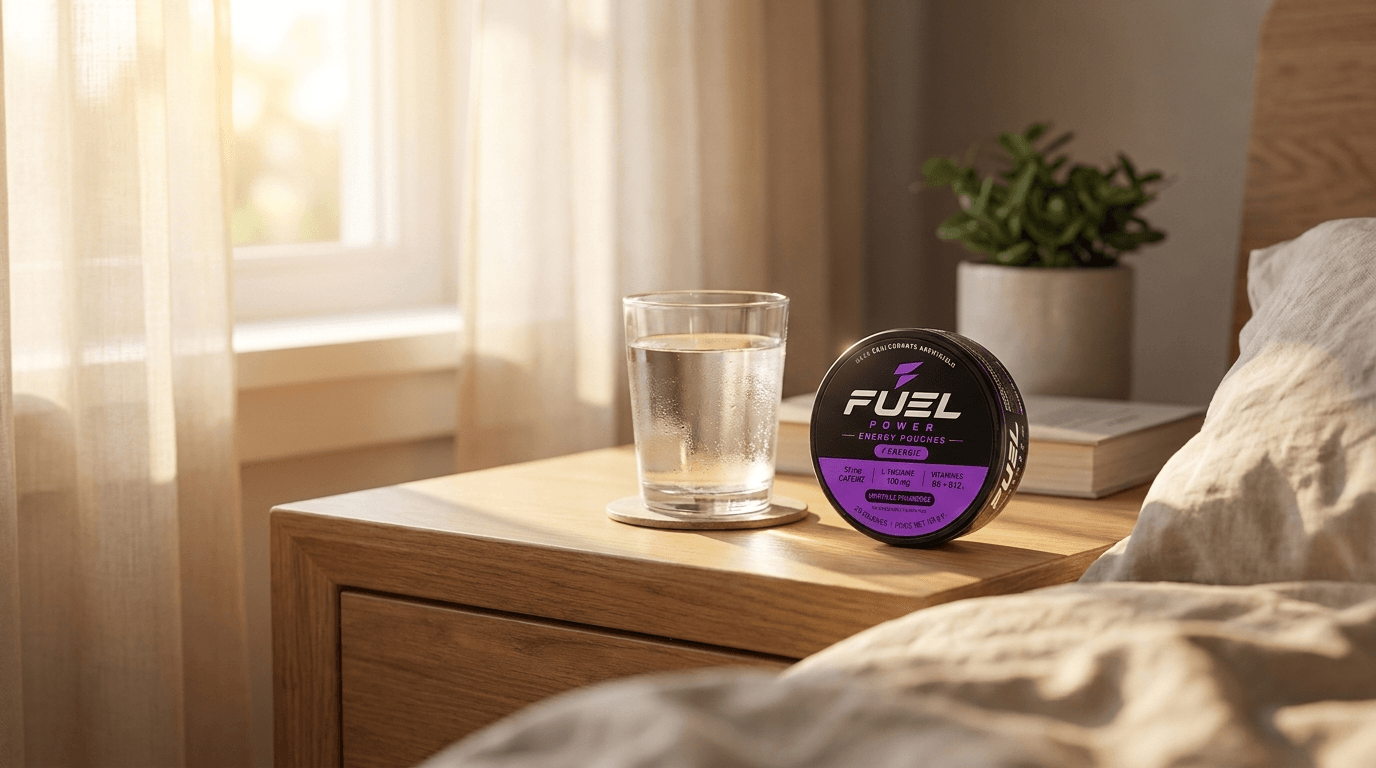
After several hours of sleep with no fluid intake, the body is running a slight water deficit when you wake up. Drinking a large glass of water as soon as you get up is a simple, low-cost habit to kick off the day. Good daily water intake practices are detailed by health authorities, who note that it's recommended to drink regularly throughout the day, without necessarily waiting to feel thirsty.
Routine 3 — Choose the right moment for your first boost
Why timing matters more than you think

Your cortisol, the hormone that naturally helps you wake up, is already at its peak between 6am and 8am for most people. Having caffeine immediately upon waking, when cortisol is already doing the work, often has less felt impact than waiting 45 to 60 minutes, once that natural peak starts to come down. It's a simple adjustment that can change how effective your first coffee or pouch of the day feels.
Coffee, pouch, or both
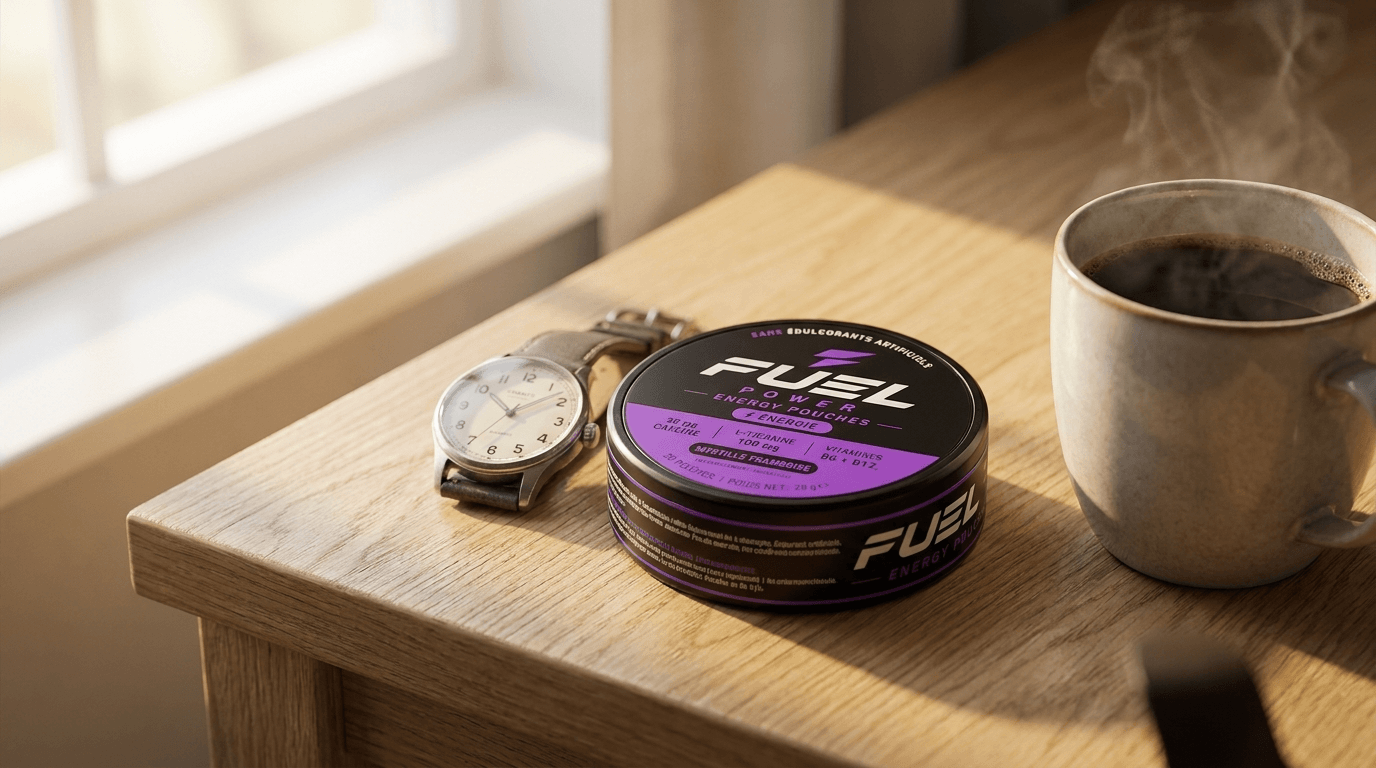
If you start your day with coffee, you already know how variable its caffeine dosage can be (see our article on why replace your coffee with an energy pouch). A FUEL POWER pouch, with its fixed 100mg of caffeine, can be an alternative or a complement depending on your own rhythm. If you want to understand exactly what that dose means over the course of a day, our article on the 100mg caffeine dosage covers this in detail.

What's useless (or can backfire) in the morning
- Drinking your coffee within 15 minutes of waking up: as mentioned above, the felt effect is often blunted at that exact moment, since cortisol is already at its natural peak.
- Stacking several caffeine sources first thing in the morning "just to be sure": better to understand how caffeine works in your body to dose smartly rather than piling up out of habit.
- Neglecting the previous night's sleep while betting everything on the morning routine: no morning routine makes up for chronic sleep deprivation.
Conclusion
A good morning routine doesn't require overhauling your life: natural light, hydration, and a more thoughtful timing for your first boost are enough to lay solid foundations for the day. These are simple adjustments, backed by well-documented physiological mechanisms, not miracle recipes.
FAQ
Why is morning light important for energy? It helps sync your internal biological clock, which regulates things like cortisol secretion and how alert you feel.
Do I really need to drink water before coffee in the morning? It's not mandatory, but it's a simple habit to offset the slight fluid deficit that builds up overnight.
Why wait before having my first coffee or pouch? Because cortisol, the natural wake-up hormone, is already at its peak for most people right after waking; waiting 45 to 60 minutes often lets you feel caffeine's effect more clearly.
Can a FUEL POWER pouch replace morning coffee? Yes, that's a possible use, notably for its fixed, known caffeine dose (100mg), unlike coffee whose dosage varies with preparation.
Are these routines enough if I'm short on sleep? No. No morning routine makes up for chronic sleep deprivation; they help optimize the energy you have, not fill a rest deficit.
Want to fit a FUEL POWER pouch into your morning routine? Discover the 6 available flavors.