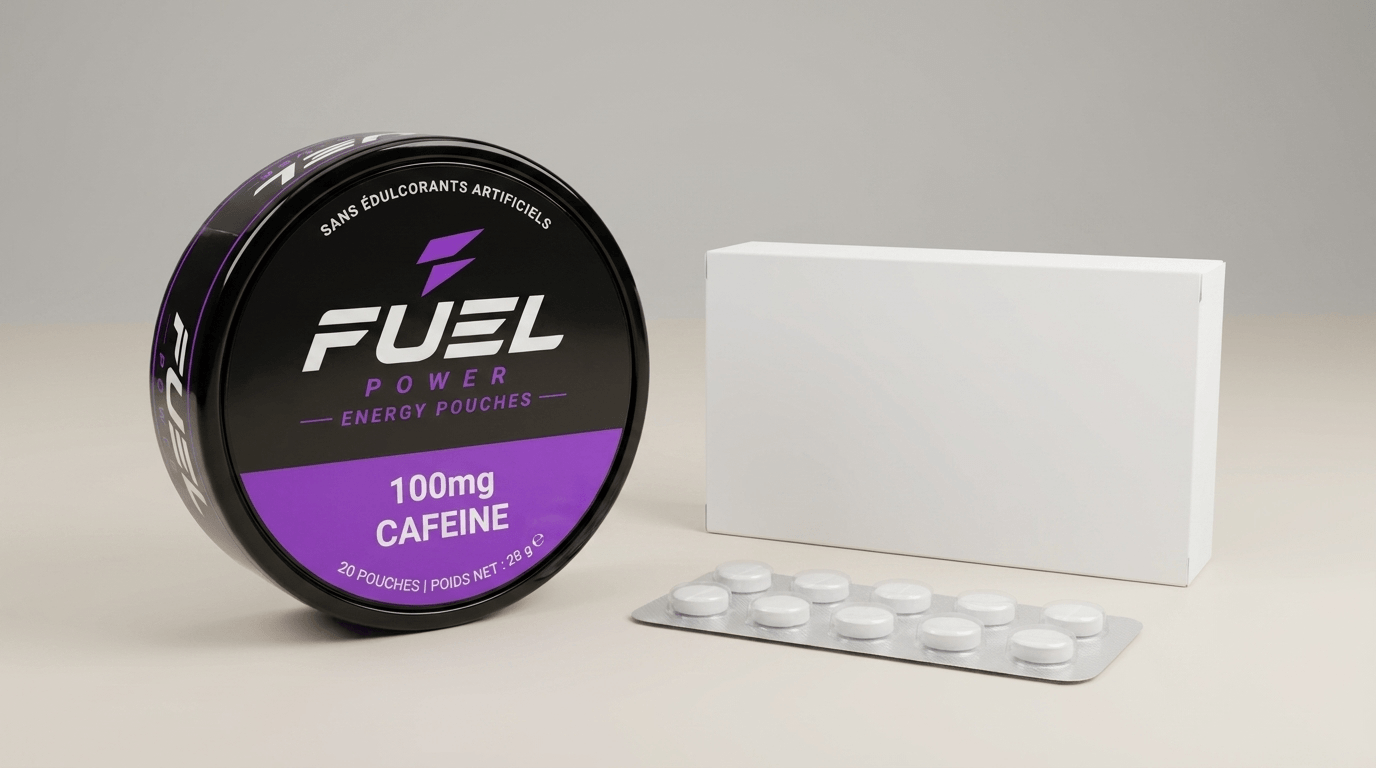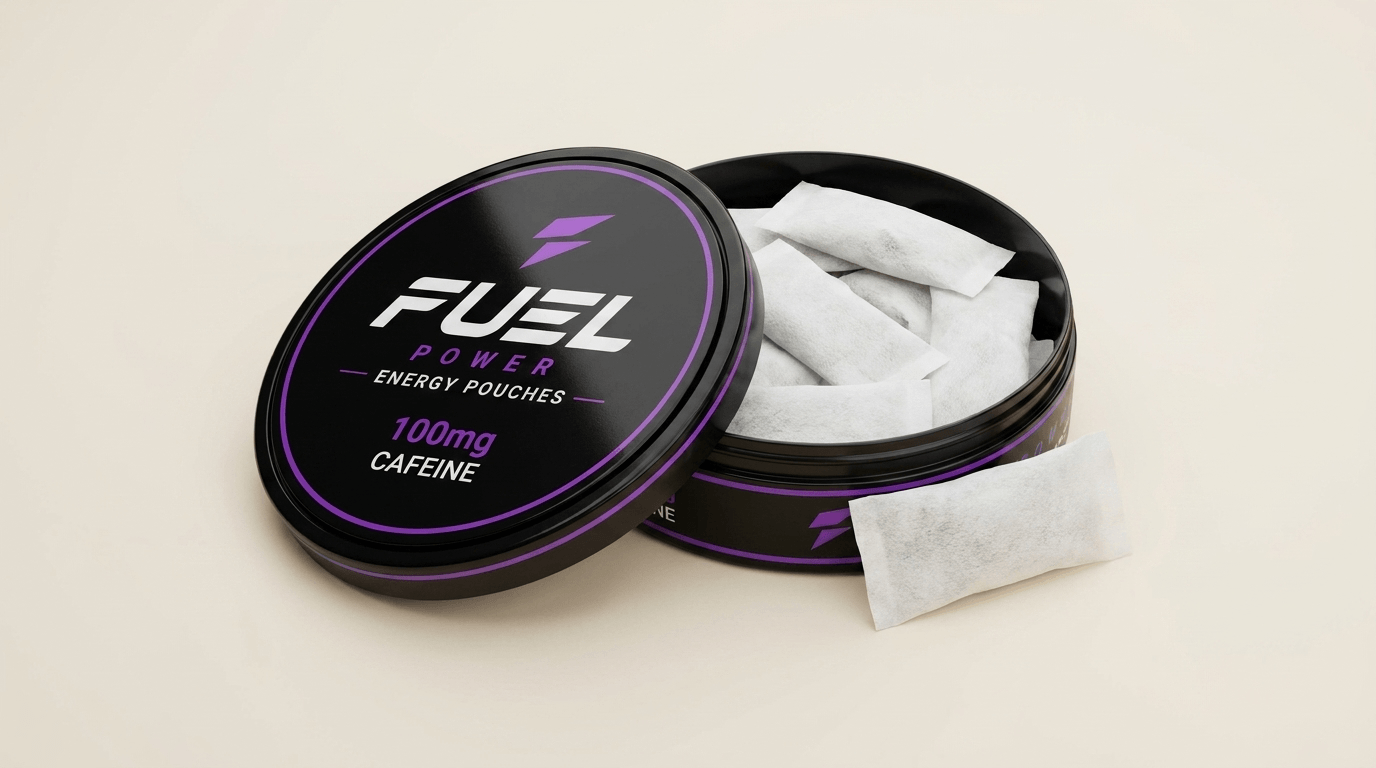
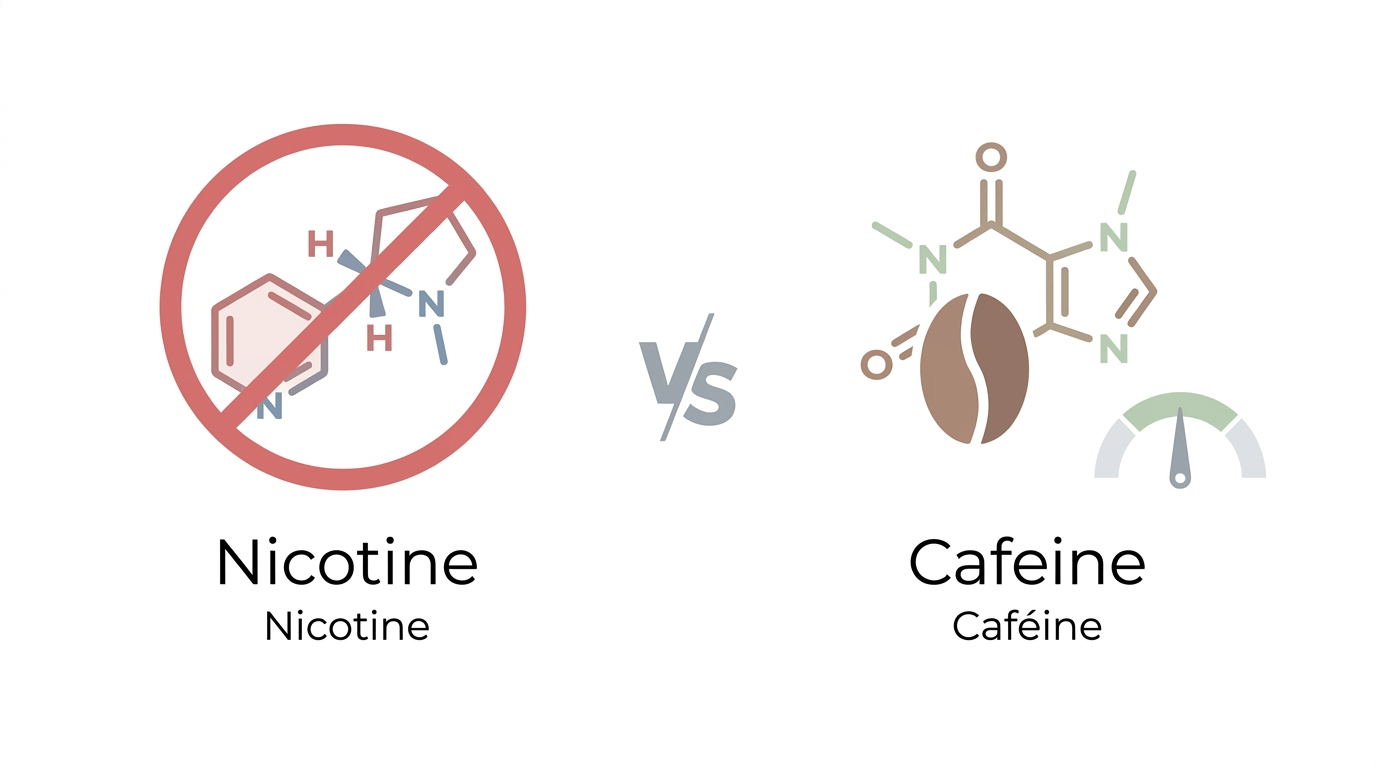
Honest question, equally honest answer: nicotine creates no dependence here, since there isn't any in the formula. But that doesn't mean the topic is closed. There's still caffeine, and it has its own say in the matter.
First, some good news: no nicotine, no that risk
Worth stating clearly, since it's often the first concern: a FUEL POWER pouch contains no nicotine at all, and therefore doesn't carry the type of dependence associated with that molecule. This is a difference in kind, not degree, compared to nicotine pouches.
But caffeine can create a real habit
Here, it's worth being honest. Caffeine is a psychoactive substance, and the body can get used to it with regular consumption. Health authorities actually phrase this with some caution in their caffeine guidance: the risk of developing dependence remains scientifically debated, but they don't rule out that early or regular consumption could favor certain habituation mechanisms, somewhat like with other substances.
In practice, what's mostly observed is tolerance: the more you consume it regularly, the less effect you feel from the same dose. And when you stop, some people experience headaches, fatigue or irritability for a few days — a known, documented phenomenon, generally without any severity.
It's not the same as the addiction you might be imagining
There's a difference between "I need my coffee in the morning or I get a headache" and addiction in the strong sense of the term, with loss of control and a major impact on daily life. Caffeine clearly sits on the side of physiological habit, not destructive behavioral addiction. This is a point health authorities also make in their caffeine reports, stressing that effects remain highly variable from person to person.
What this means for everyday pouch use
Nothing alarming, but a real piece of advice: avoid treating the pouch as an automatic crutch the moment the slightest tiredness shows up. If you notice you can no longer start your day without one, or that you're increasing the frequency without really thinking about it, that's a good time to pause and observe how your body reacts without it. Our article on how many pouches per day at most gives you concrete benchmarks for keeping usage reasonable.
And if you want to cut back
Reducing gradually rather than stopping all at once clearly limits withdrawal discomfort. Nothing mandatory here — plenty of people consume caffeine their whole lives without it causing any particular problem — but if you want to ease off, it's better to go step by step than to stop overnight.
Conclusion
No nicotine, so no risk of that specific kind of dependence. But caffeine remains an active substance, capable of creating a very real physiological habit, even if it has nothing to do with addiction in the dramatic sense of the word. The right approach stays the same as with any habit: stay in tune with your own consumption rather than just going along with it.
FAQ
Can a FUEL POWER pouch be addictive like a nicotine pouch? No, it contains no nicotine at all, so it doesn't carry that specific type of dependence.
Can you become dependent on the caffeine in a pouch? A form of tolerance and physiological habit is possible with regular consumption, as with any caffeine source.
What are the signs of an excessive caffeine habit? Feeling like you need it as soon as you wake up, a frequency that keeps increasing without a particular reason, or headaches when you stop are signals worth watching for.
Should I stop caffeine all at once if I want to cut back? No, a gradual reduction generally limits withdrawal discomfort compared to stopping abruptly.
Is caffeine dependence dangerous? It generally remains mild and temporary if you stop, unlike other more severe forms of dependence.
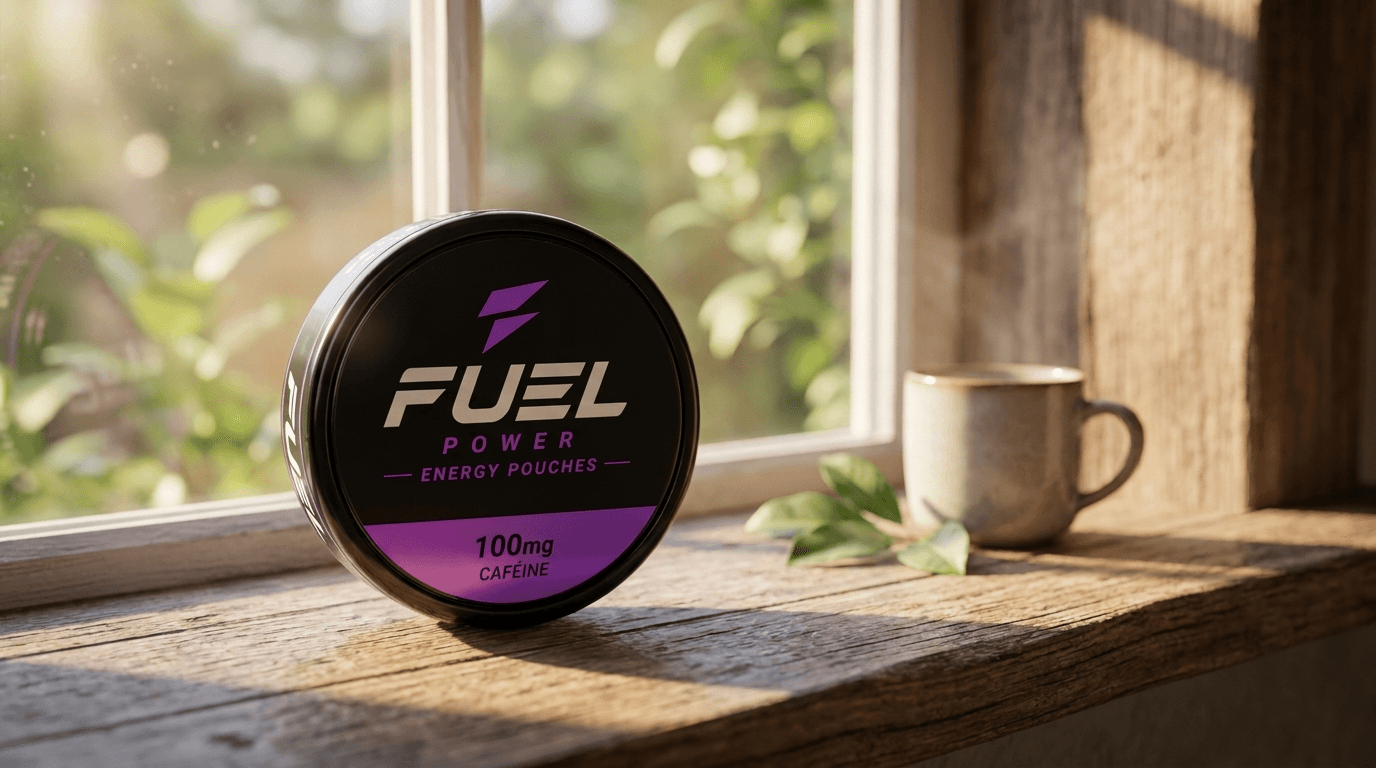
Want reasonable, transparent use? Discover the 6 FUEL POWER flavors and their precise 100mg caffeine dosage.